Why I Left a “Dream” Career
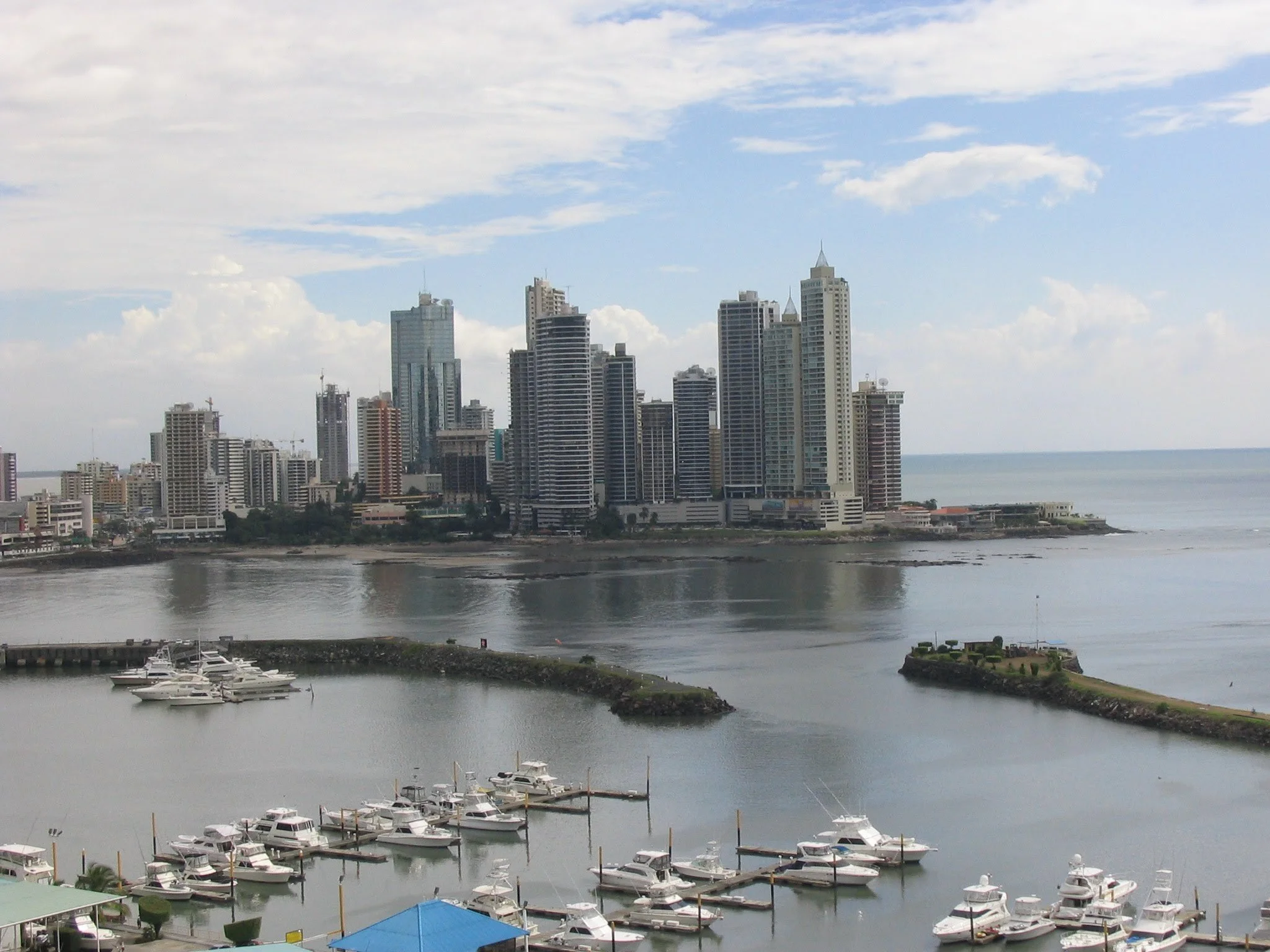
The view of Panama City from my living room
Every spring, the anniversary pops up of an experience that fundamentally shaped who I am and the work I do today.
It’s a reminder of the time I started, and then left, what many would consider a “dream” career, and the period of profound self-doubt and uncertainty that followed.
I haven’t written about this experience much, perhaps because it was a while ago, or maybe because I have some lingering shame about how it all unfolded.
But I’m sharing it now, both because it was a pivotal experience that shaped what I believe about work and careers, and also because I think it’s important to normalize that we all make career mistakes, or decisions that don’t turn out like we expected.
Sometimes it can feel like you’re the only one who's veered off course in your career.
But no one’s career is perfect, even when it might seem that way from the outside. There’s so much power in sharing the real stories of our career successes and our failures, and that honesty benefits us all.
With that in mind, let me take you back to the early 2000s…
An Offer I Couldn’t Refuse
At age twenty-four, I started what some people would consider a dream job as a U.S. Foreign Service Officer.
In case you’re not familiar with the term (I wasn’t until I applied!), that’s the official title for members of the U.S. Diplomatic Corps who work at our embassies and consulates all over the world.
My journey to becoming a diplomat started as a recent college grad living in Washington, DC. I was just two years out of school and I’d worked in a few entry-level jobs, with no real idea what kind of work I wanted to do or where my career was headed.
Then one day I saw a recruitment ad for the Foreign Service in the newspaper (yes, the actual newspaper — this was 2002!). They were leading a big push to bring in new officers at the time, and while I had never considered, or even heard of, this career path, I was intrigued by the opportunity to live abroad and represent my country.
The first step in the process was a free exam being offered later that fall, so I figured why not give it a try? Curious what it would be like and thinking there was no way I’d advance beyond that in the process, I signed up.
But I did pass the exam, and I continued through each stage of the long and competitive application process: an intensive full-day interview, an extensive background check, and a medical clearance.
When I received the official offer to join the Foreign Service, I was both excited and shocked.
In retrospect, I can see that I was pursuing this goal because it seemed interesting and prestigious and hard to get.
But since I never thought I’d get the job, I never really thought about whether or why I wanted it.
Moving Abroad, and Hating My Job
While I hadn’t expected to get it, this felt like an offer I couldn’t refuse. So I accepted, quit my old job and told everyone I knew about my glamorous new one, and prepared for what I thought would be an adventurous new career and life.
The first step was an orientation course with a cohort of nearly 100 other new recruits. We bonded, learned the ropes, and were repeatedly told we were the best of the best (it’s safe to say that inflated my 24-year-old ego!).
Toward the end of training, I learned I’d been assigned to my first posting as a Consular Officer in Panama City, Panama. My friends threw me multiple going-away parties, I packed up my life in DC, and with my new diplomatic passport in hand, I boarded a flight to my new life.
But within a few weeks of arriving, I knew I'd made a huge mistake.
I’d been so caught up in the “dreaminess” of this career that I never stopped to think about what the reality of it would be like, and whether it was right for me.
I never considered questions like:
Did I actually enjoy foreign policy, day in and day out? Not really; I just loved to travel and wanted to live in interesting places around the world.
Was working in a large, complex, bureaucratic organization right for me? Definitely not, and I soon became incredibly frustrated by the endless rules and inefficiencies.
Did I agree with the policies I would be enforcing? I spent my days deciding based on 2-3 minute interviews whether or not to grant someone a visa to visit the U.S., and I quickly realized how fundamentally wrong that felt to me.
I find fulfillment in helping people achieve their goals, building meaningful relationships, and seeing the impact I'm having. Community and collaboration are some of my top values.
Yet in this job I spent my days processing paperwork and telling hopeful people "no" all day long, with zero sense of any impact I was making other than crushing people's dreams. I couldn’t see it then, but I realize now that my work was completely in conflict with my core values and strengths.
That conflict quickly began to eat away at me, and within a few months, I was miserable.
I was supposed to be in this role for two years before rotating to another assignment, and I had no idea how I was going to make it through. I dreaded going to work every day, and eventually landed in what I can recognize now as extreme burnout.
Luckily, I had some great colleagues and made friends who helped keep me afloat, but it was an extremely challenging two years. By the end I was literally counting down the days until I could leave.
To be clear, I have a huge appreciation for the important work the Foreign Service does and the many talented public servants who represent the U.S. across the world. And Panama is a beautiful country that I'd love to return to someday. My unhappiness stemmed from being in a job that wasn’t right for me, and the toll that took on my mental health over time.
Moving On, But Not Sure Where
Even though I knew in my bones after just a few weeks that this career wasn't right for me, deciding to leave was still incredibly hard.
Part of me kept thinking I should stick it out and try harder (“so many people would love to have this job!” said my inner critic). But I listened to the quieter and wiser inner voice that told me I could trust myself and quit.
Just two short years after starting this prestigious career that I thought would last decades, I resigned. While I was relieved to come home, I also felt humiliated and like a total failure. And I was thoroughly adrift, with no idea where to go or what I would do next.
So I moved back to the small town I grew up in to stay with my parents (something I never thought I’d do, but I was lucky they'd have me). I took some time to recover from the burnout I was feeling, and went on a trip to some of the places I’d hoped to visit in the international career that was no longer to be. I applied to grad school and didn't get in, which was a huge disappointment.
And as the months rolled on and I still had no plan in sight, I started working temp jobs filing papers and answering phones for a fraction of my former salary, as a way to make some money and have a reason to leave the house. It was what I needed, but it felt like a huge fall from grace after where I’d been.
As my time in limbo continued, I questioned my decision to leave, even though I knew it had been the right one.
But eventually, and much more slowly than I anticipated, I started moving forward again. Almost a year after I first returned home, I moved back to DC, got a new job with a nonprofit focused on international development, reapplied to grad school and got in this time, and eventually made my way to New York City and a whole new chapter.
(That chapter ended in 2014, when I left another job without knowing what was next — which is how Careers for Social Impact came to be.)
What I Learned And Why It Matters
I share this story because I think it's important to normalize the tough times in our careers.
We all have moments when we feel like we're wandering in the career wilderness: when everything feels hard or unclear, when we don't know where we’re going and it feels like we'll never figure it out. I've been there too, believe me.
But while it felt like a huge failure at the time, my experience in Panama played a huge role in how I think about careers and inspired me to find my purpose through the work I do now: helping others gain the career clarity I didn't have and build meaningful careers that are right for them.
This experience taught me so many things that guide my work today; to name just a few:
I learned that no one else can decide what’s right for you. It’s so hard not to focus on what other people think or what you “should” be doing in your career. But you’re the only person who can know what’s truly right for you. That can sometimes mean going against the conventional wisdom, or saying no to the shiny title that it seems like everyone else wants. Developing an internal compass that can help you navigate the tension between the “shoulds” and what's actually right for you is some of the most important work you can do.
I learned that nothing is forever, and that our career mistakes shape who we become. While those two years felt endless at the time, in the grand scheme of things they were a quick stop on my career journey, and I never would be where I am today without them. We all make career detours sometimes, and I really believe there’s something important to learn from every experience, especially the ones we deem failures in the moment.
I learned that sometimes quitting is the right answer. We’re so often told to stick it out, to try harder, to line up the next job before leaving the one we’re in. And sometimes that’s the best path, but not always. Being miserable at work impacts all the other parts of your life, and sometimes leaving is exactly what you need to give yourself the time, energy, and mental space to figure out what’s next.
Looking back, I can see now that in deciding to take this job I was focused more on prestige and external validation than on my own values and what actually fit me.
I can also give myself lots of grace, because I didn’t yet have the experience or self-knowledge to understand what would be right for me, the way I do now.
If I had done the work I do with my clients today, I would have asked better questions before I packed up my life and moved to Panama. I would have realized that the day-to-day reality and culture of the job wasn't right for me, no matter how impressive it sounded. And I would have understood that while the Foreign Service is in fact a dream career for many people, it wasn’t for me.
I've had several other periods of career uncertainty and wandering since this one, and there are probably more in my future.
And while those times are always uncomfortable, I understand now that they’re part of every career journey, and that they can lead to great things if we stay open to what they have to teach us.
If you’ve navigated your own career wilderness, or you even find yourself in one right now, I hope this story helps you feel a little less alone.
And if a career “mistake” helped you get to where you are today, I hope you’ll share that story with someone who might need to hear it.
Because building a meaningful career comes with twists and turns that we don’t always talk about. And we all benefit from hearing what it really takes, including the hard but important detours along the way.

About The Author
Erin Ewart is the founder of Careers for Social Impact and a social sector career and leadership coach. She partners with purpose-driven leaders to help them grow their careers, their leadership, and their impact.